

Tuning In to the Rhythm of Routine
Step into any successful songwriter's studio, and you'll find one thing they all share: a routine. Like the steady click of a metronome, it underpins the daily rhythm of creating music.
A songwriting routine is a deliberate pattern of activities:
- Regular writing sessions
- Dedicated practice time
- Song analysis
- Skill development
- Consistent creative work
Routine can absolutely be your ticket to songwriting success, and here's why.
Skill Development: The Magic in the Monotony
Routine is where skill gets quietly built.
Imagine a piano teacher asking you to play the same piece over and over. At first, you miss notes, your timing drifts, and everything feels awkward. Then one day, your fingers seem to know where to go without any conscious effort.
That's the power of repetition: it turns effort into instinct. It's the same unglamorous work that builds the calluses on a guitarist's fingers, and those calluses are proof that progress happened.
Productivity: Striking the Right Chords Consistently
Structure keeps chaos under control, and in a creative life, routine is the quiet force that creates order.
Think of it as the conductor of an orchestra: its job isn't to make the music, but to make sure the music actually gets played. A consistent routine helps you show up regularly, reduce decision fatigue, build momentum, and produce more songs over time. Rather than waiting for random bursts of inspiration, it turns songwriting into a repeatable practice.
Consistency: From One-Hit Wonders to Enduring Legacies
Routine also lays the foundation for consistency, one of the most underrated qualities in music.
We've all seen artists who explode onto the scene and vanish just as fast, and the difference between a brief moment and a lasting career often comes down to staying power: you keep writing, keep improving, keep releasing, and keep building your catalog.
Routine has its limits, though. Too much structure can make songs predictable, and predictable songs rarely move anyone. That's where inspiration comes in.
The Ephemeral Dance of Inspiration
If routine is the steady rhythm, inspiration is the soaring melody. It's the unexpected spark, the sudden lyric, the chord progression that makes you stop and ask, "Where did that come from?" It tends to arrive uninvited while you're driving, walking the dog, or playing guitar aimlessly in the kitchen. You can't schedule it, but you can learn to recognize its value when it shows up.
(If waiting for inspiration has become your default, perfectionism may be the real culprit, and there are four clear signs to watch for.)
Innovation: Breathing Life Into Music
When inspiration strikes, it opens doors and pushes you to experiment with new sounds, unusual rhythms, unexpected chord changes, and fresh lyrical ideas. Take Radiohead's Kid A. That album grew out of experimentation and a real willingness to take creative risks, and that's almost always where innovation begins.
Emotional Connection: Crafting Stories From the Heart
Routine may help your music exist, but inspiration is what makes it matter. It turns lyrics into stories and melodies into experiences you can feel. Think of Adele's heartbreak anthems, Bob Dylan's vivid narratives, or Leonard Cohen's poetic observations. The strongest songs often start as personal experiences that become universal through inspired expression, and that's how a song connects two people who have never met.
Originality: Your Musical Signature
Let's be honest: nobody remembers generic. Listeners remember music with personality and a point of view, and inspiration is usually the catalyst for that kind of originality, the ingredient that helps you make something unmistakably yours. Beethoven earned his legend by breaking from convention, and that willingness gave the world pieces like the Moonlight Sonata.
Inspiration has a weakness, too. Lean on it exclusively, and you'll spend more time waiting than writing. The trick is bringing the two together.
Striking the Perfect Chord: Harmonizing Routine and Inspiration
The most productive songwriters use both. Routine develops skills and creates opportunities. Inspiration supplies the ideas and the magic. The aim is simple: build an environment where inspiration has somewhere to land.

Scheduled Creativity Sessions
One of the best ways to combine the two is to schedule creativity sessions, appointments with possibility. Set aside dedicated time for free writing, melody exploration, title generation, lyric experiments, and song starts. The routine creates the space, and inspiration fills it.
Not sure what to put in those sessions? Start with these 7 daily habits that will instantly improve your lyrics. Each one is a five-minute rep built for exactly this kind of scheduled practice.
Stay Open to Spontaneous Ideas
You never know when inspiration will strike, whether on a walk, in the car, at the grocery store, or in the middle of the night. Capture those ideas the moment they arrive, using whatever's closest: a notebook, voice memos, your notes app, a lyric journal. Treat your whole day like an open jam session.
One of the richest sources hides in plain sight: how 30 minutes of conversation can unlock 100% of your song ideas shows you how to mine everyday talk for lyrics and titles.
Integrate Inspirational Activities Into Your Routine
You can't force inspiration, but you can create the conditions that invite it. Feed your creativity with things that have nothing to do with sitting at the piano: reading, hiking, traveling, listening to unfamiliar music, visiting museums, cooking, having real conversations. These experiences become the raw material for future songs.
Adapt Your Routine When Necessary
A good routine bends with you; think of it as a river rather than a railroad track. If your most creative hours come early in the morning, build your schedule around them. If evenings work better, lean into those instead. The goal is a system that helps you do your best work.
Concluding the Composition
Songwriting isn't a battle between routine and inspiration. It's a partnership.
Routine gives you the discipline to keep showing up, and if something keeps stopping you from showing up, it's worth naming it: here are 9 songwriting excuses and how to kill them.
Inspiration gives you something worth showing up for, and the strongest songs are born when the two work together. So build a routine, stay open to inspiration, and let them create something neither could manage alone. Music is built on harmony, after all, and songwriting is no different.
FAQs
1. Is routine more important than inspiration in songwriting?
Neither outranks the other. Routine builds skill and consistency, while inspiration fuels originality and emotional connection. The best results come from combining the two.
2. How can I balance routine and inspiration?
Schedule creative sessions, capture spontaneous ideas as they come, add a few inspiring activities to your week, and adjust your schedule to match your natural creative energy.
3. Can routine hurt creativity?
A rigid routine can. A flexible one usually helps, removing friction so it's easier to create consistently.
4. Can I rely solely on inspiration?
You can, but you'll likely produce far less. Inspiration is unpredictable, and routine keeps you creating even when it doesn't show up on schedule.
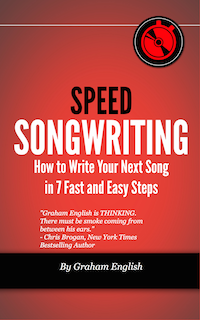
The 7-Step Method That Helps You Actually Finish a Song
Most songwriters have more ideas than finished songs. This free guide shows you the exact sequence to take an idea from start to done — without the rewriting loop or the blank-page panic.
Enter your name and email and I'll send it right to your inbox.
No spam. Just useful things for songwriters.
Love this piece. So true. Thanks.
Glad you liked it, Denis!
A lot of wisdom here…
Thanks for the reminders…
Steve
You’re welcome, Steve! Thanks for reading!
Nice piece, Graham! Something to think about.
Thanks, Robert! Shoot me an email if you ever need a hand with your songwriting routine.